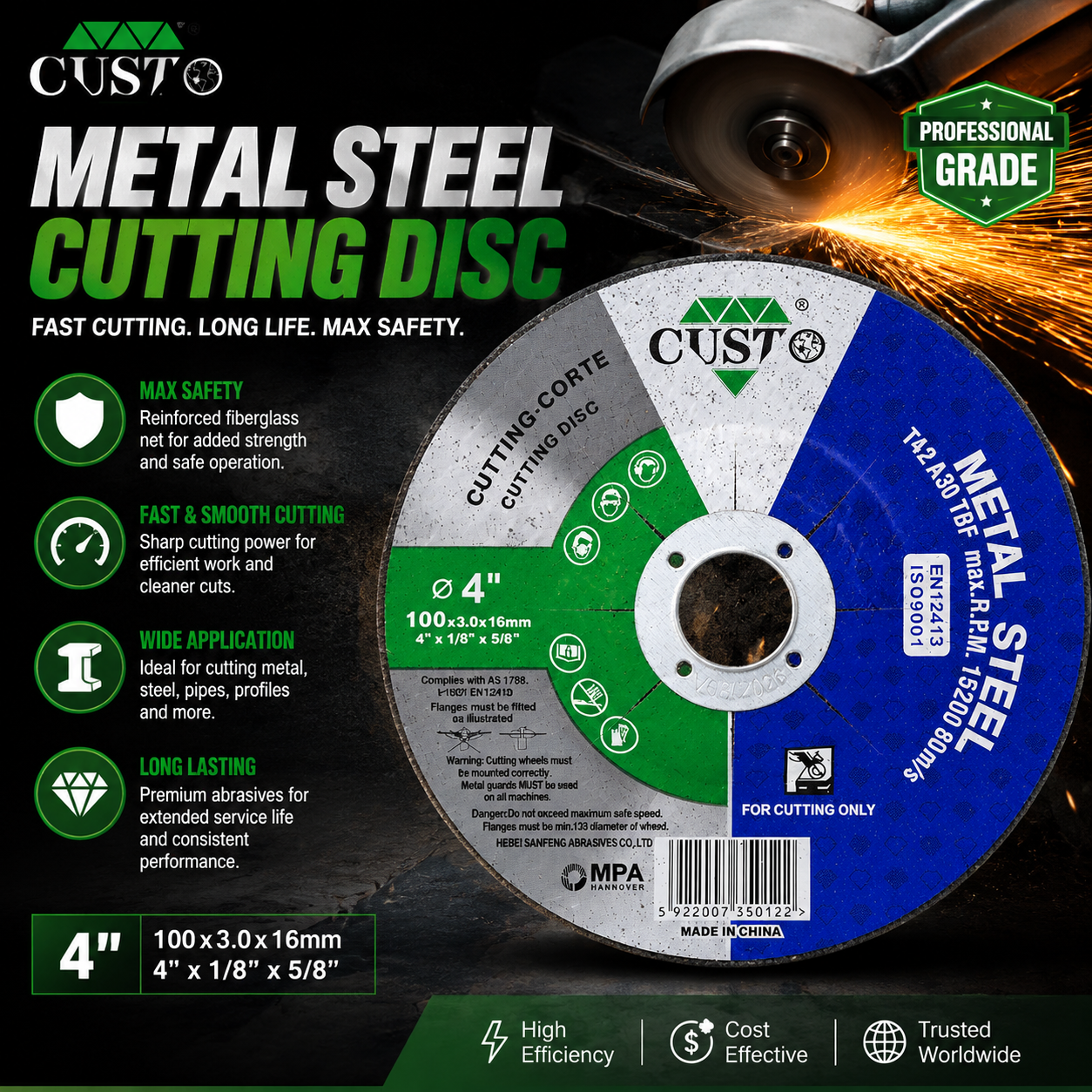
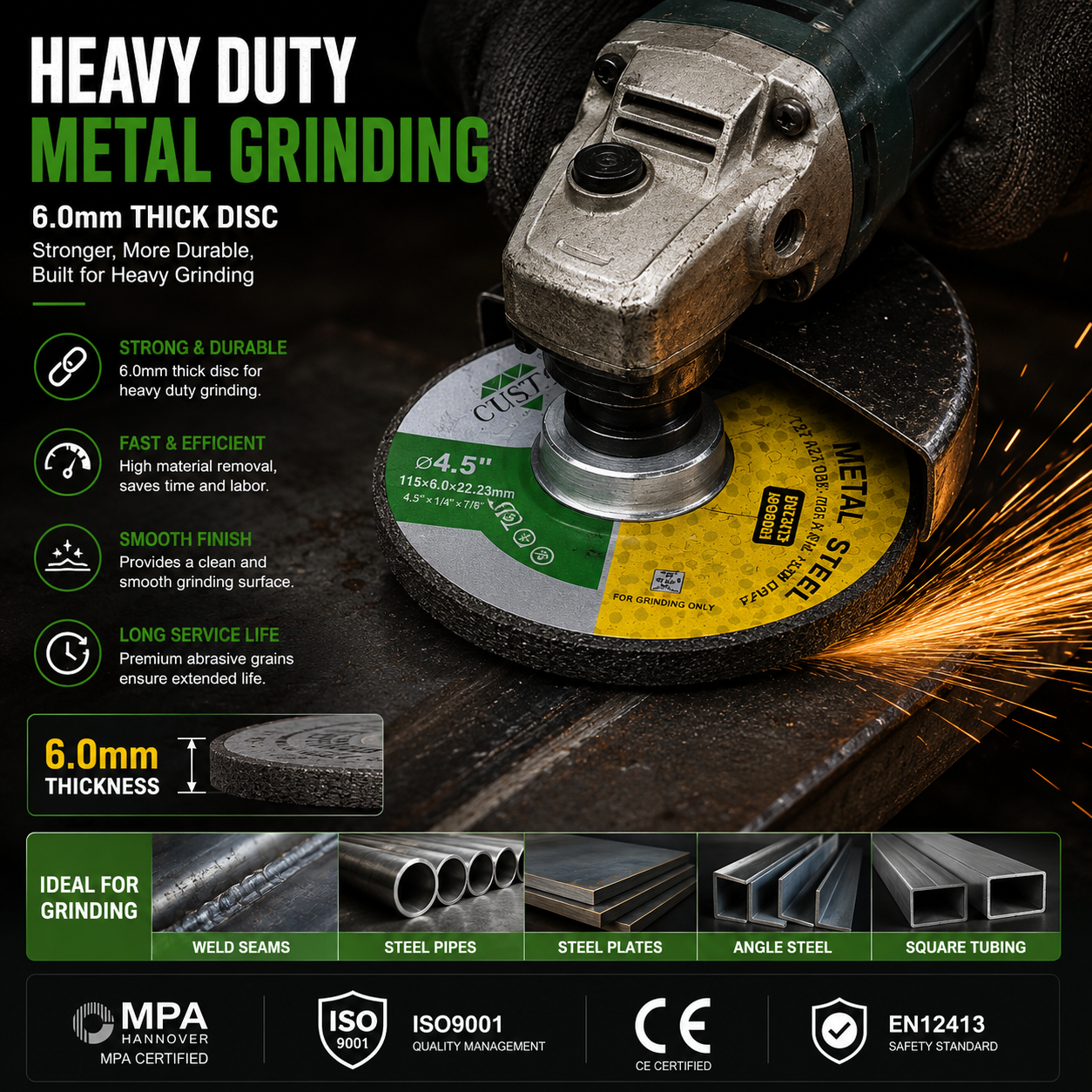
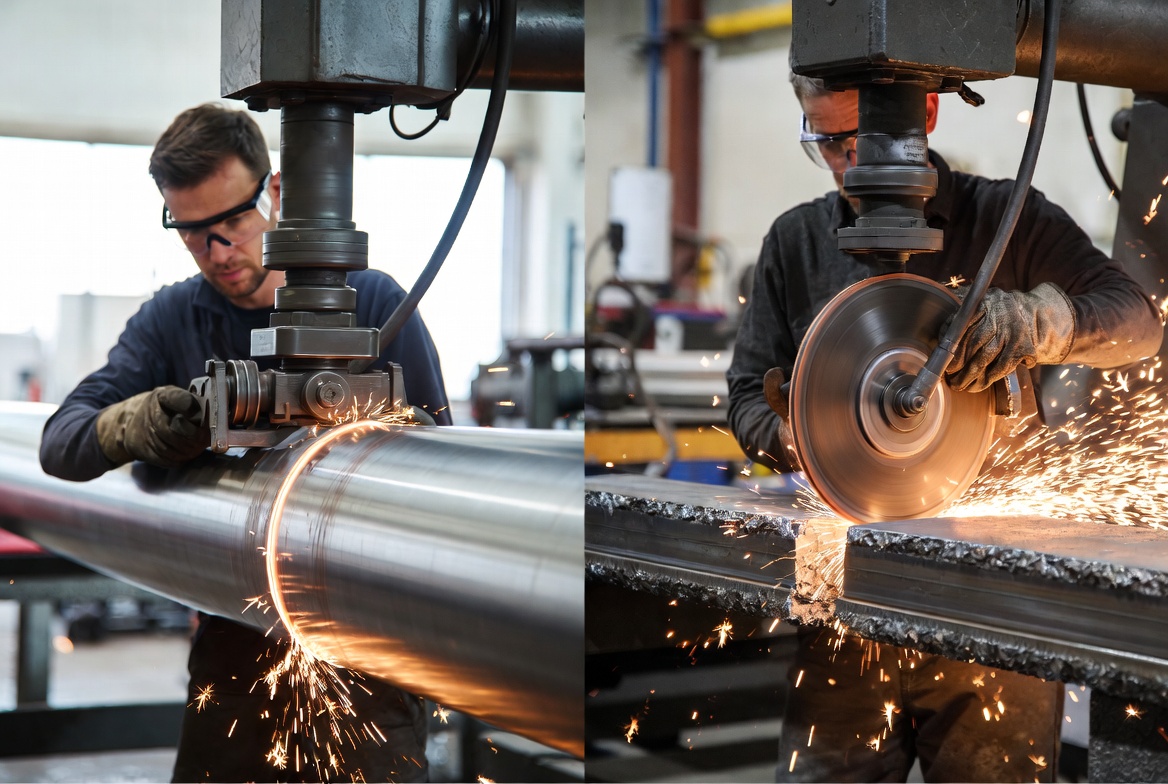
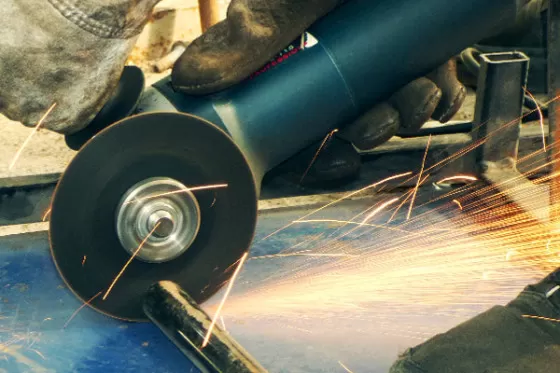
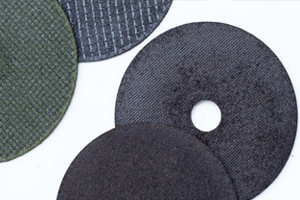
An angle grinder cut off wheel is a tool used for cutting hard materials such as metals, concrete, and stone. With advancements in technology, the materials and design of the angle grinder cut off wheel have continually innovated, improving cutting efficiency, service life, and safety. The development of angle grinder cut off wheel has undergone a transformation in both materials and technology.
In the early stages, the angle grinder cut off wheel was primarily made from grinding wheels, resins, and metal powders. The materials were relatively simple, limiting cutting efficiency and resulting in shorter service lives. Early cut off wheels relied heavily on manual grinding and traditional manufacturing techniques. While they could perform basic cutting tasks, they were noticeably lacking in hardness, wear resistance, and stability.
As technology advanced, the materials used for angle grinder cut off wheel evolved into more durable and efficient composite materials. Particularly by the end of the 20th century, the cut off wheel began to incorporate new materials such as aluminum alloys, resin-reinforced fiberglass, and diamonds. These materials significantly increased the hardness and strength of the cut off wheel, allowing it to handle higher work loads.
For example, the introduction of diamond cut off wheels enabled the angle grinder cut off wheel to be used on harder materials, such as stone and concrete. Diamond's hardness and wear resistance allowed the cut off wheel to maintain a longer lifespan during high-intensity cutting processes, reducing the frequency of replacements and saving costs.
With the development of modern manufacturing technologies, the production processes of the angle grinder cut off wheel have seen substantial improvements. For example, the use of cold pressing and hot pressing technologies has greatly enhanced the precision of the shape and size of the cut off wheel, resulting in more stable cutting performance. Additionally, advanced processing techniques and laser cutting technology have started to be applied in the manufacturing of high-end angle grinder cut off wheel, further optimizing their quality and performance.
Modern technology has also allowed for more uniform material distribution in the cut off wheel, helping to reduce vibrations during cutting, improving work efficiency, and enhancing cutting quality. These advancements not only extended the service life of the cut off wheel but also improved its cutting precision and stability.
As environmental concerns have grown, the manufacturing of modern angle grinder cut off wheel has increasingly focused on eco-friendliness and sustainability. New materials such as environmentally friendly resins and non-toxic metals are gradually replacing traditional harmful substances, reducing the environmental impact of the production process. Many cutting wheels manufacturers like Sanfeng are also developing more energy-efficient production methods to reduce energy consumption and production emissions.
Moreover, recycling technology for angle grinder cut off wheel is continuously improving, with many products now being designed with recyclability in mind to reduce waste and lessen environmental burdens. This trend not only aligns with global environmental policies but also enhances the social responsibility of businesses.
The angle grinder cut off wheel has evolved from simple materials to high-performance composite materials, with each stage of technological progress significantly enhancing its performance and range of applications. As environmental awareness grows and production technologies continue to innovate, future angle grinder cut off wheel will become even more efficient, durable, and eco-friendly. If you're looking for high-quality, high-performance angle grinder cut off wheel, Sanfeng is your trusted partner. As one the the leading abrasive wheel suppliers in China, Sanfeng's angle grinder cut off wheels, with their advanced materials and technology, can meet the needs of various industrial and construction applications, improving your work efficiency and cutting performance.
 English
 Türkçe
 한국어
한국어 français
 Español
 русский
 português
 العربية
 български
 Nederland
 Latinae