Resin bond abrasive wheels power more industrial cutting and grinding operations worldwide than any other bonding system — and for good reason. At Sanfeng Abrasives, resin bonding has been the cornerstone of our production since 1997. In this deep dive, we explain exactly how resin bonds work, where they excel, and where you should consider alternatives.
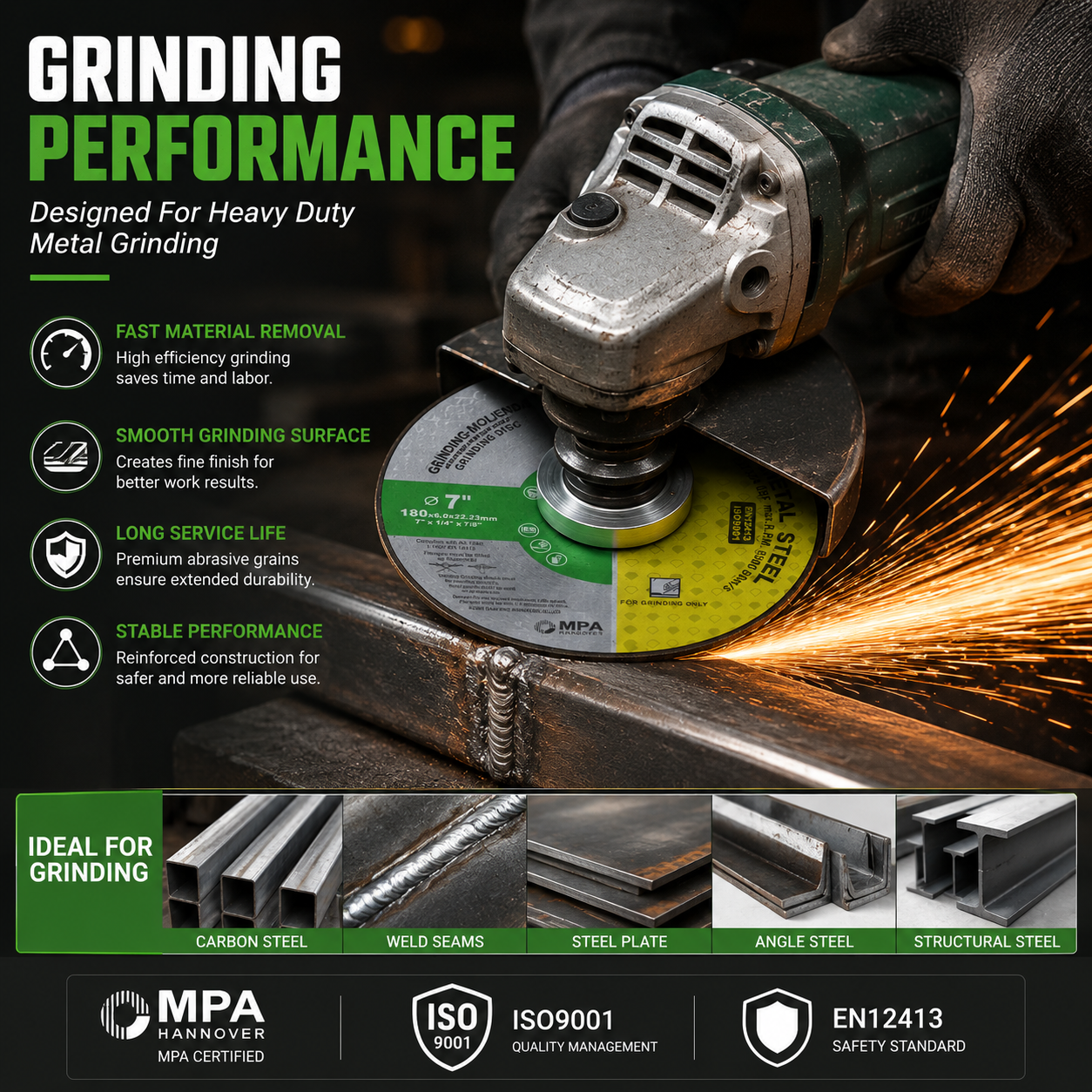
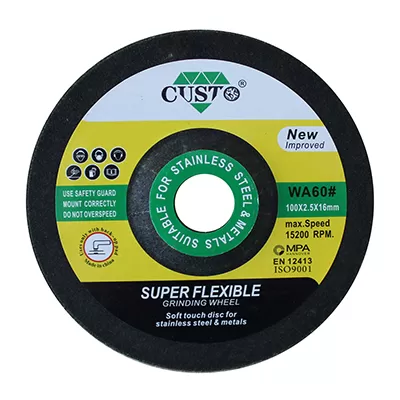
At its core, a resin bond wheel is a precisely engineered composite of abrasive grains held together by a thermosetting phenolic resin matrix.
High-quality aluminum oxide or zirconia grains are mixed with liquid phenolic resin and reinforcing fillers, then pressed under heat and pressure around a fiberglass web. The resin cures into a tough, slightly flexible matrix that holds grains firmly yet allows controlled fracture — the secret behind self-sharpening action. Sanfeng’s 20,000 m² facility houses state-of-the-art mixing and pressing lines that guarantee batch-to-batch consistency.
The chemistry of the resin directly dictates real-world behavior under load.
Unlike rigid vitrified bonds, resin provides elasticity that absorbs shock and vibration. This makes resin wheels ideal for handheld angle grinders where operators apply variable pressure. Sanfeng’s reinforced resin formulation delivers high burst strength while maintaining enough give to prevent premature grain pull-out.
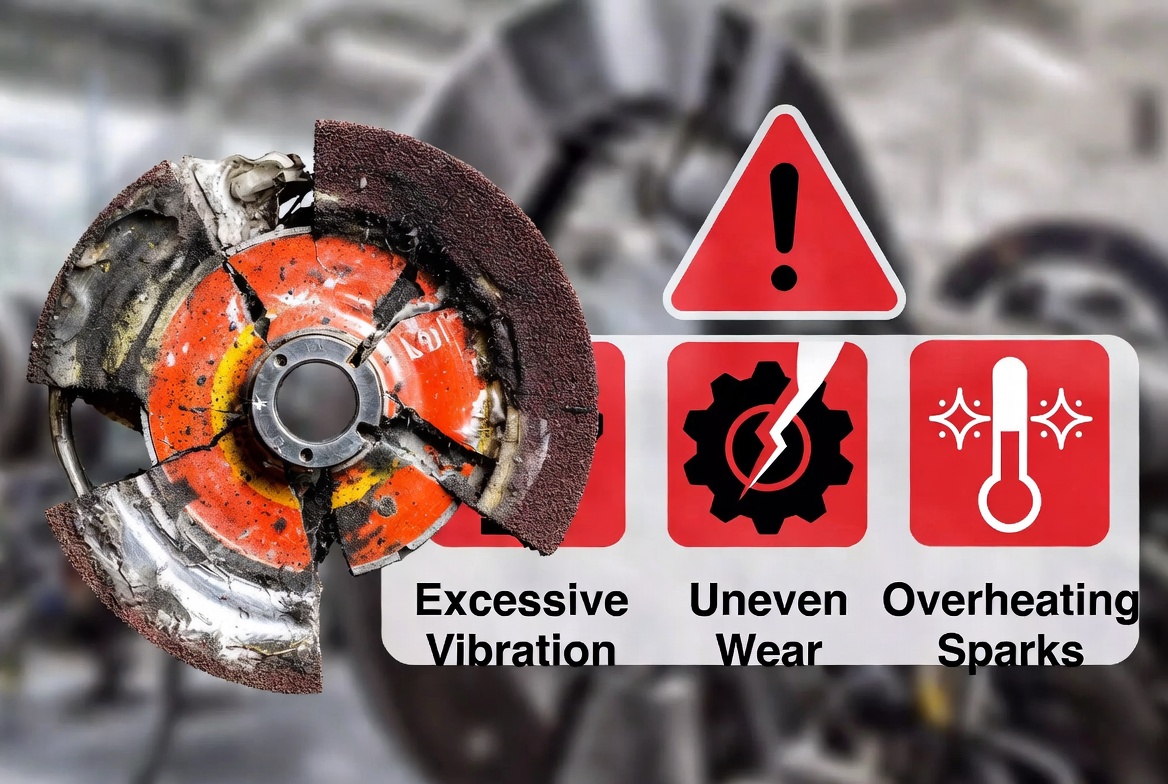
Modern resin systems can handle peripheral speeds up to 80 m/s and intermittent temperatures approaching 180 °C. However, sustained heavy grinding generates more heat than the bond prefers, which is why we recommend proper pressure technique and occasional wheel dressing.
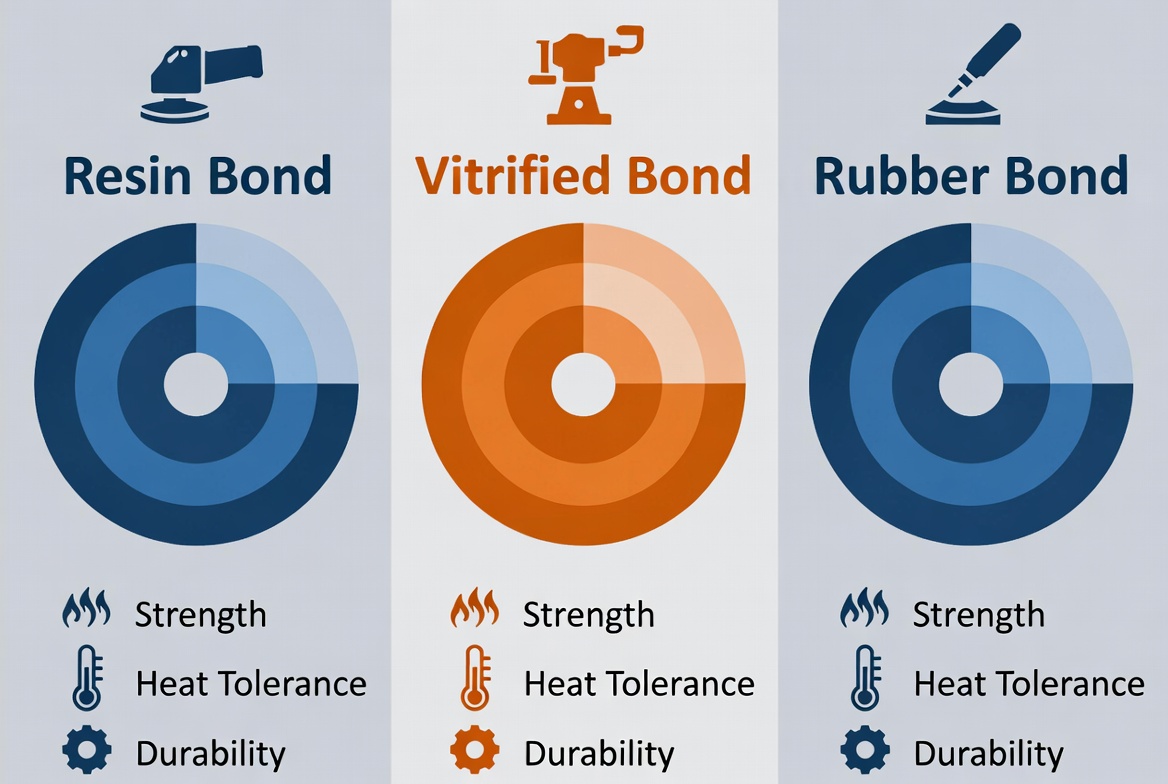
Not every job needs the same bond. Here’s how the three major systems compare in practice.
Resin bonds offer the best balance of speed, safety, and versatility for portable tools. Vitrified wheels excel in precision, high-temperature bench grinding but are more brittle. Rubber bonds are the most flexible and produce the finest finishes but wear faster and cannot handle high speeds.
You’ll find Sanfeng resin wheels on shipyard scaffolds, automotive assembly lines, foundry shakeout areas, and stone fabrication shops — anywhere operators need reliable, high-speed performance without constant wheel changes.
To illustrate the differences clearly, here is a comparison table based on decades of side-by-side testing at our facility and customer sites:
| Bond Type | Strength | Heat Resistance | Typical Use | Best For |
|---|---|---|---|---|
| Resin | High flexibility | Moderate (to 180 °C) | Cutting & grinding on angle grinders | Heavy fabrication, portable tools |
| Vitrified | Rigid | High (to 300 °C) | Precision bench grinding, sharpening | Tool rooms, surface grinders |
| Rubber | Very flexible | Low (to 120 °C) | Polishing, light deburring | Final finish, contour work |
The list is long and field-proven:
Excellent self-sharpening for consistent cutting rates
High burst strength meeting ANSI B7.1 and OSHA requirements
Lower vibration for reduced operator fatigue
Good performance on both ferrous and non-ferrous metals
Cost-effective for high-volume production
Sanfeng’s proprietary resin formula further enhances these advantages by incorporating special fillers that reduce loading on aluminum and stainless steel.
Resin isn’t perfect. In very high-temperature continuous dressing operations or when ultra-fine surface finishes (below Ra 0.2 µm) are required, vitrified or rubber bonds may perform better. Resin wheels can also degrade faster if stored improperly — more on that in our storage guide.
Not all resin wheels are created equal. Look for:
Precise grain distribution
Multiple layers of high-tensile fiberglass
Controlled curing cycles
100 % burst-speed testing
At Sanfeng Abrasives, every wheel undergoes these checks before it leaves our 200-person team’s hands.
Looking for resin bond wheels that actually deliver on performance promises? Sanfeng Abrasives manufactures over 500,000 wheels annually under strict ISO 9001 and ANSI standards. Whether you need standard stock items or custom OEM specifications for your exact material and machine, our engineers are ready to help you select — or design — the perfect solution.
Contact us today for a no-obligation technical consultation, sample order, or full production quote. Let’s make sure every cut you make is faster, safer, and more profitable.
 English
 Türkçe
 한국어
한국어 français
 Español
 русский
 português
 العربية
 български
 Nederland
 Latinae