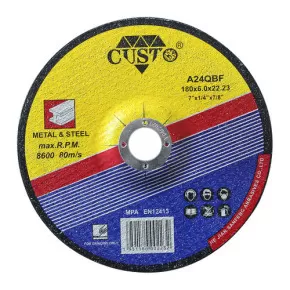
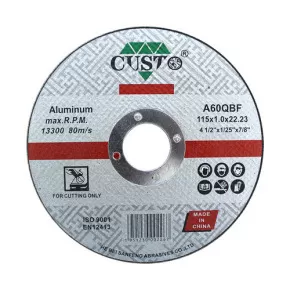
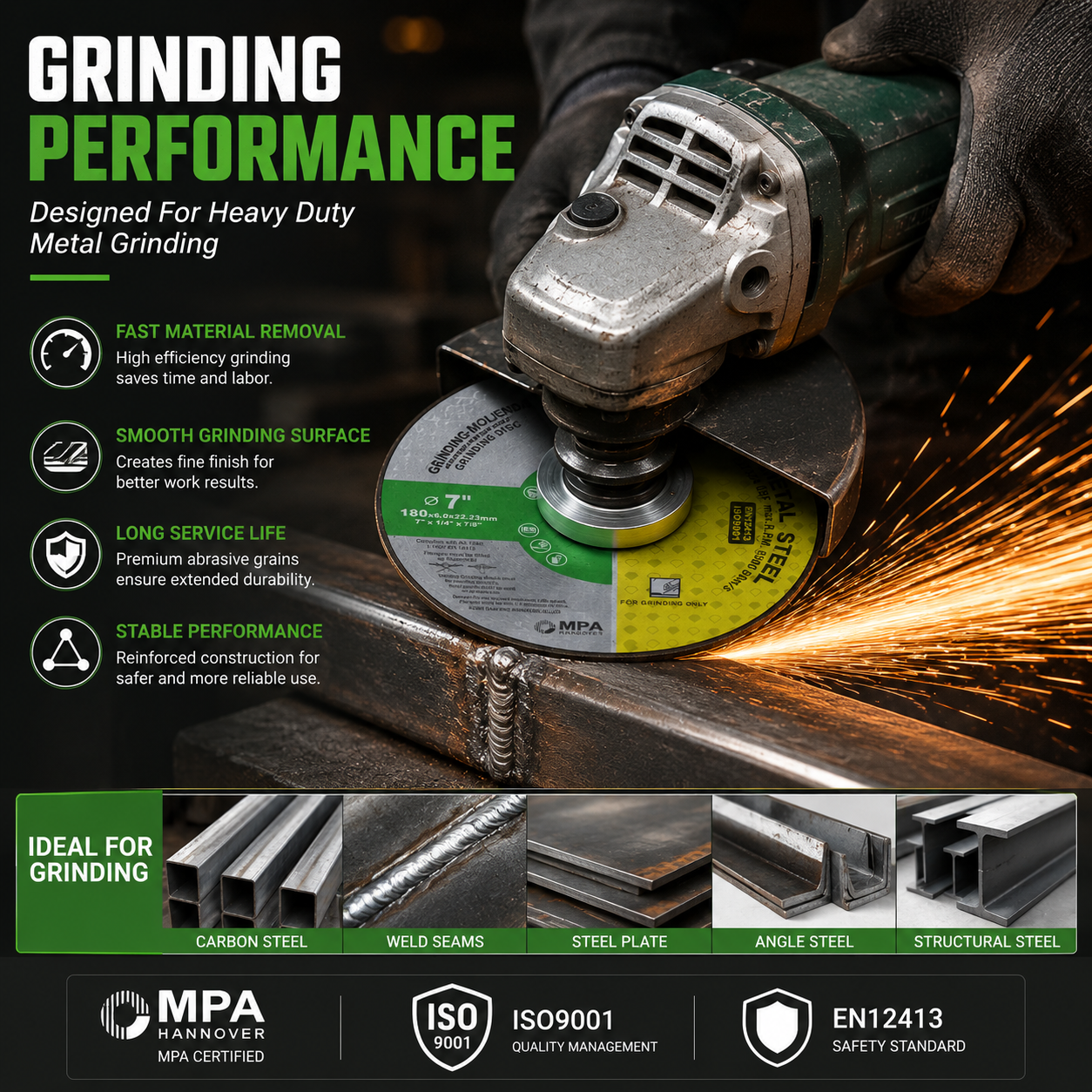
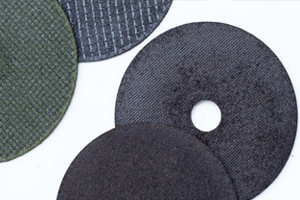
Cutting wheel thickness might seem like a minor detail, but it dramatically influences cutting speed, material waste, precision, and operator safety. With nearly 30 years of specialized production, Sanfeng Abrasives has refined thickness specifications to meet the diverse demands of global industries.
Thickness determines the kerf width (the amount of material removed during the cut). Thinner wheels cut faster with less resistance and generate less heat, while thicker wheels offer greater stability and durability for demanding applications.
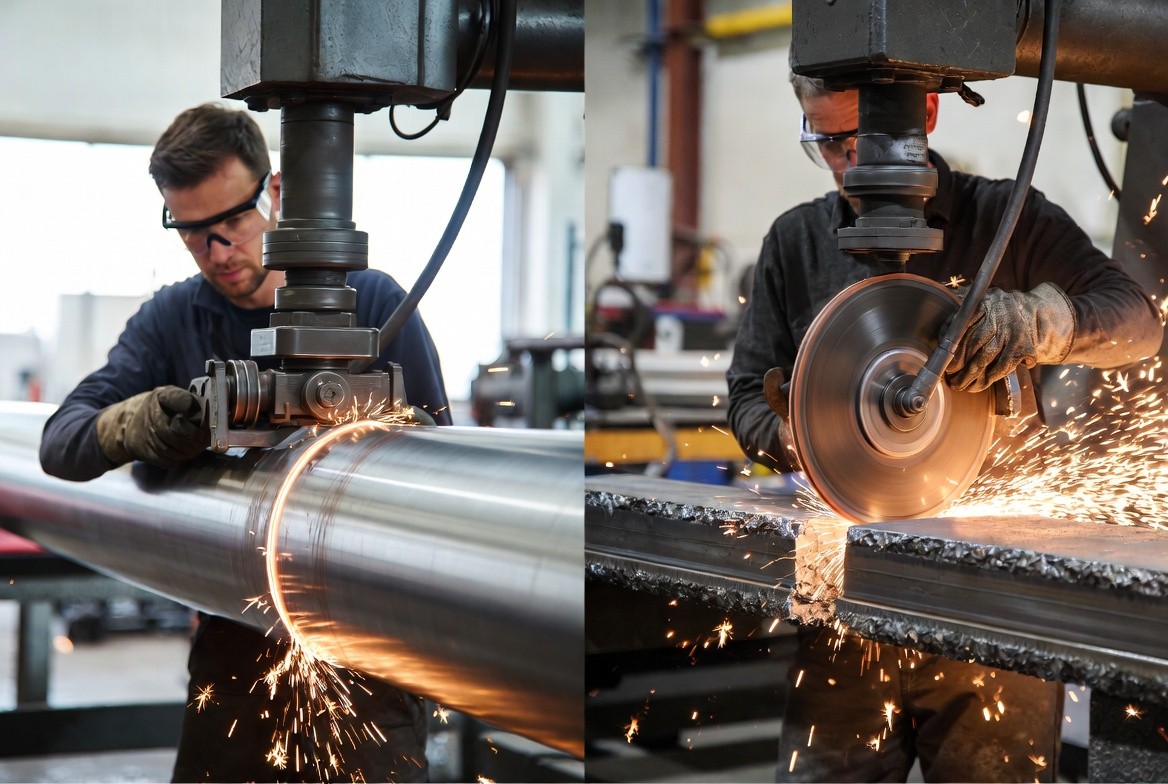
Ultra-thin wheels (0.8–1.0 mm) slice through metal with minimal effort, often completing cuts 30–50% faster than standard 2.5 mm wheels. This speed advantage is especially noticeable in high-volume production lines.
Thinner wheels produce narrower kerfs, reducing material waste — a significant cost saver when working with expensive alloys. They also create cleaner edges that require less post-cut grinding.
Here is a practical selection table based on Sanfeng’s field data:
| Material | Recommended Thickness | Key Benefits | Best Sanfeng Wheel Series |
|---|---|---|---|
| Carbon Steel | 1.6–2.5 mm | Balanced speed and durability | METAL Cutting Wheel |
| Stainless Steel | 0.8–1.0 mm | Minimal heat, no discoloration | INOX Cutting Wheel |
| Aluminum & Soft Metals | 0.8–1.2 mm | Prevents loading, clean cuts | ALUMINUM Cutting Wheel |
| Stone & Concrete | 2.5–3.2 mm | Structural strength for tough materials | STONE Cutting Wheel |
For carbon steel, 1.6 mm offers an excellent compromise. For stainless steel, our ultra-thin INOX wheels prevent heat buildup that could cause chromium carbide precipitation and reduce corrosion resistance.
Soft metals load easily. Sanfeng’s ultra-thin ALUMINUM Cutting Wheels with non-loading coating maintain consistent performance without clogging.
Masonry requires thicker, reinforced wheels. Our 2.5–3.2 mm STONE Cutting Wheels provide the necessary rigidity to handle vibration and abrasive dust.
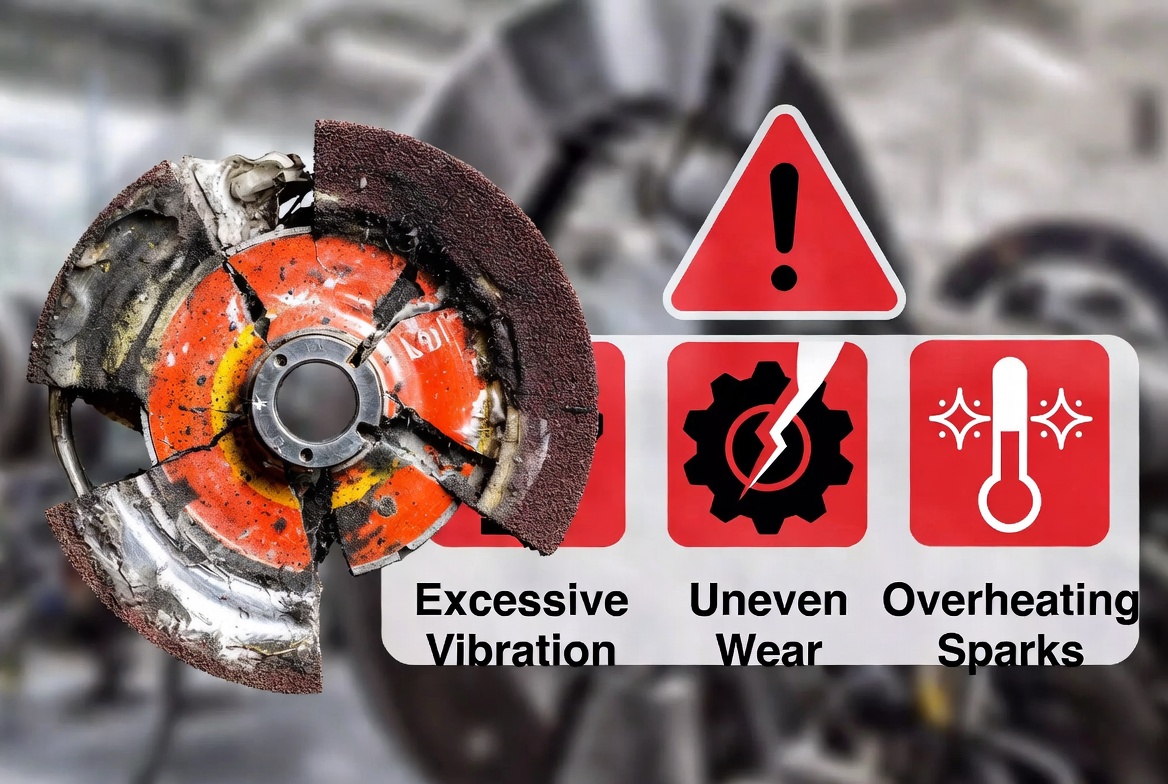
Using an ultra-thin wheel on very thick, hard material increases the risk of wheel deflection or breakage. Conversely, a thick wheel on thin sheet metal wastes material and generates excessive heat. Always match thickness to both material and machine power rating.
Sanfeng recommends starting with the thinnest wheel that can safely handle the job. Our wheels are tested to exceed ANSI B7.1 and OSHA standards, with multiple fiberglass reinforcement layers for added safety margin.
Need help choosing the optimal cutting wheel thickness for your operation? Sanfeng Abrasives offers free technical consultation and sample packs tailored to your materials and machines. With 500,000+ wheels produced annually and full OEM capability, we can support both small-batch testing and large-scale production contracts. Contact our team today — let’s reduce your cutting costs and improve safety at the same time.
 English
 Türkçe
 한국어
한국어 français
 Español
 русский
 português
 العربية
 български
 Nederland
 Latinae