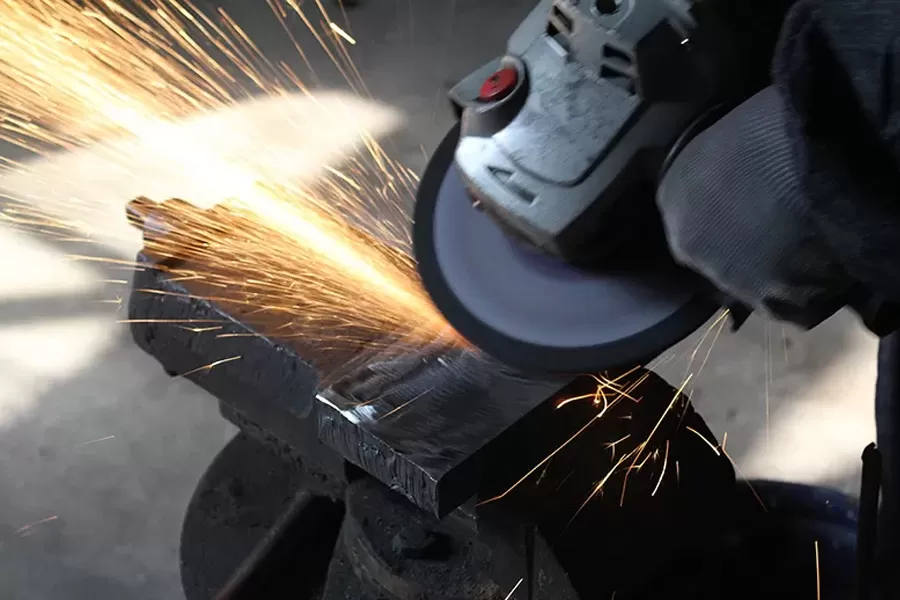
In the world of industrial manufacturing, the hum of a grinding wheel is the sound of productivity. Whether it’s shaping aerospace components, smoothing welds in a shipyard, or cutting stone for architectural marvels, the quality of your abrasive tools directly impacts your bottom line. However, with a global market flooded with options, identifying a supplier that balances high-performance engineering with cost-effectiveness can be a challenge.
This guide explores the top grinding wheel manufacturers worldwide, highlighting the industry titans and the specialized leaders who are redefining precision.
Tracing its origins back to 1885, Norton Abrasives is perhaps the most recognized name in the industry. Now a flagship brand of the Saint-Gobain Group, Norton leverages centuries of materials science to offer a massive catalog of products.Norton is renowned for its “Quantum3” technology and ceramic alumina grains, which allow for faster metal removal with less operator fatigue. Their strength lies in their global distribution and massive R&D budget, making them a go-to for high-end aerospace and automotive applications.
3M is synonymous with scientific breakthrough. Their Carborundum brand has been a staple in workshops since 1908. 3M changed the game with the introduction of Precision-Shaped Grain (PSG) technology, found in their Cubitron II line.Unlike traditional crushed grains that “plow” through metal, 3M’s triangular-shaped ceramic grains act like miniature knives, slicing through material cleanly. This results in cooler operating temperatures and a significantly longer wheel life, though often at a premium price point.
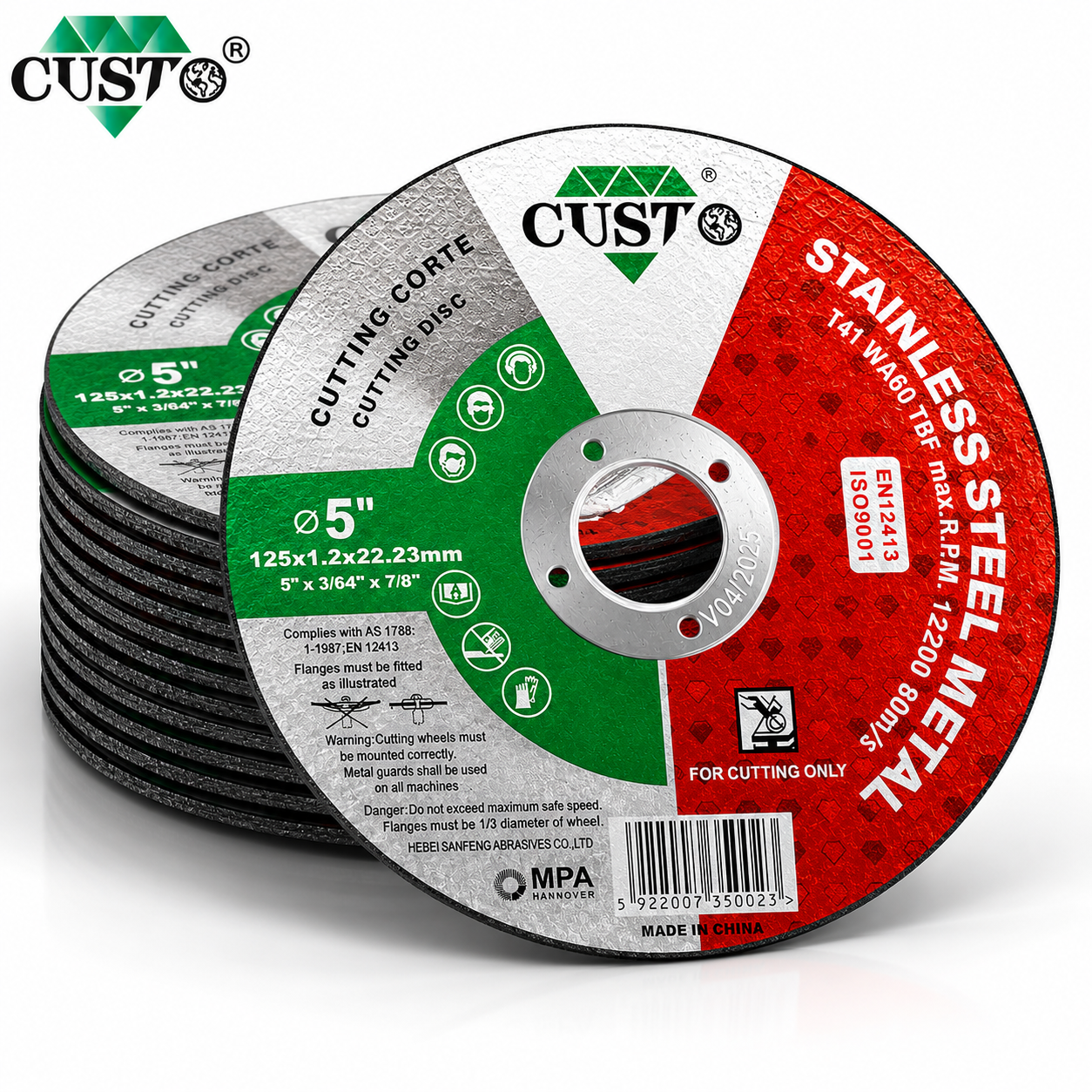
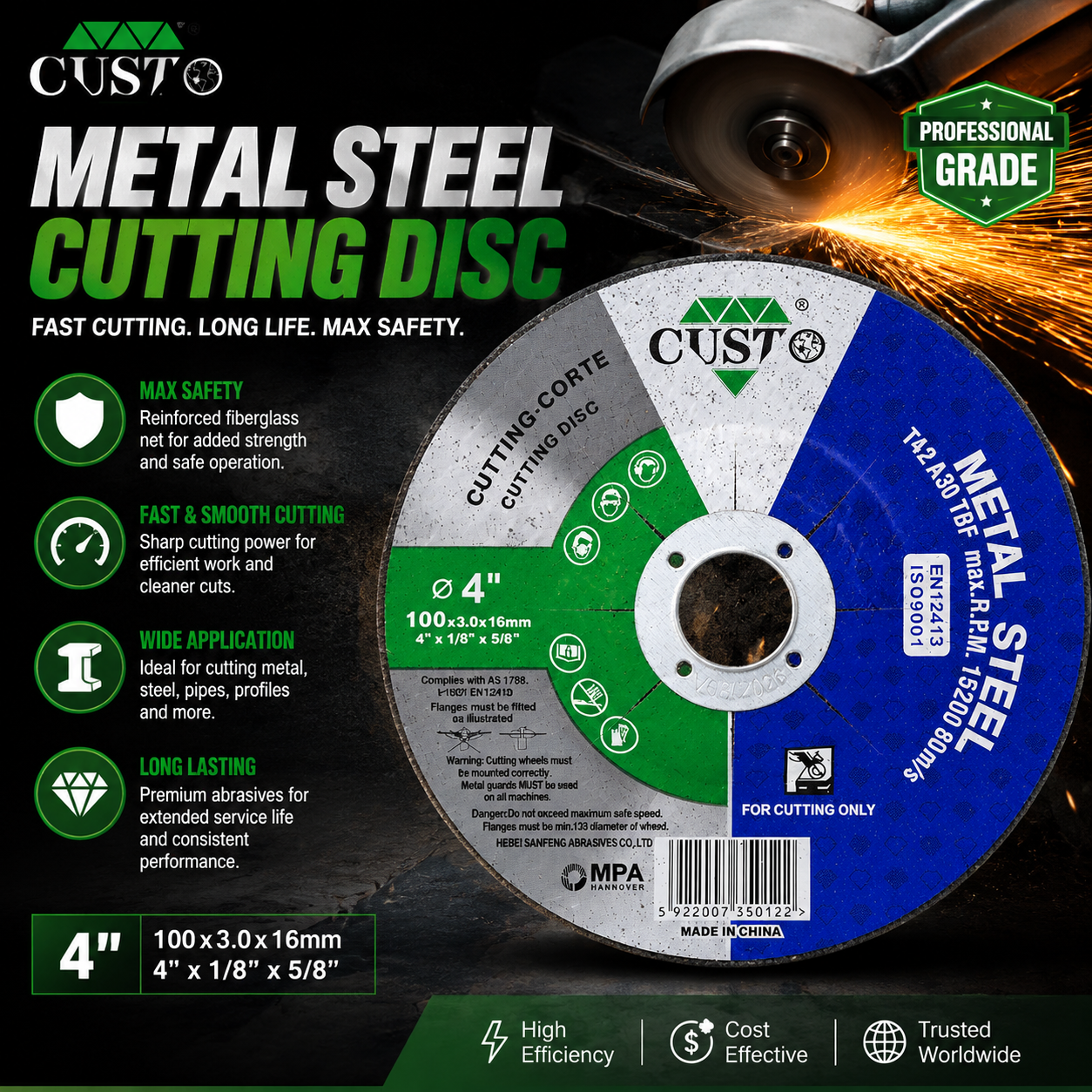
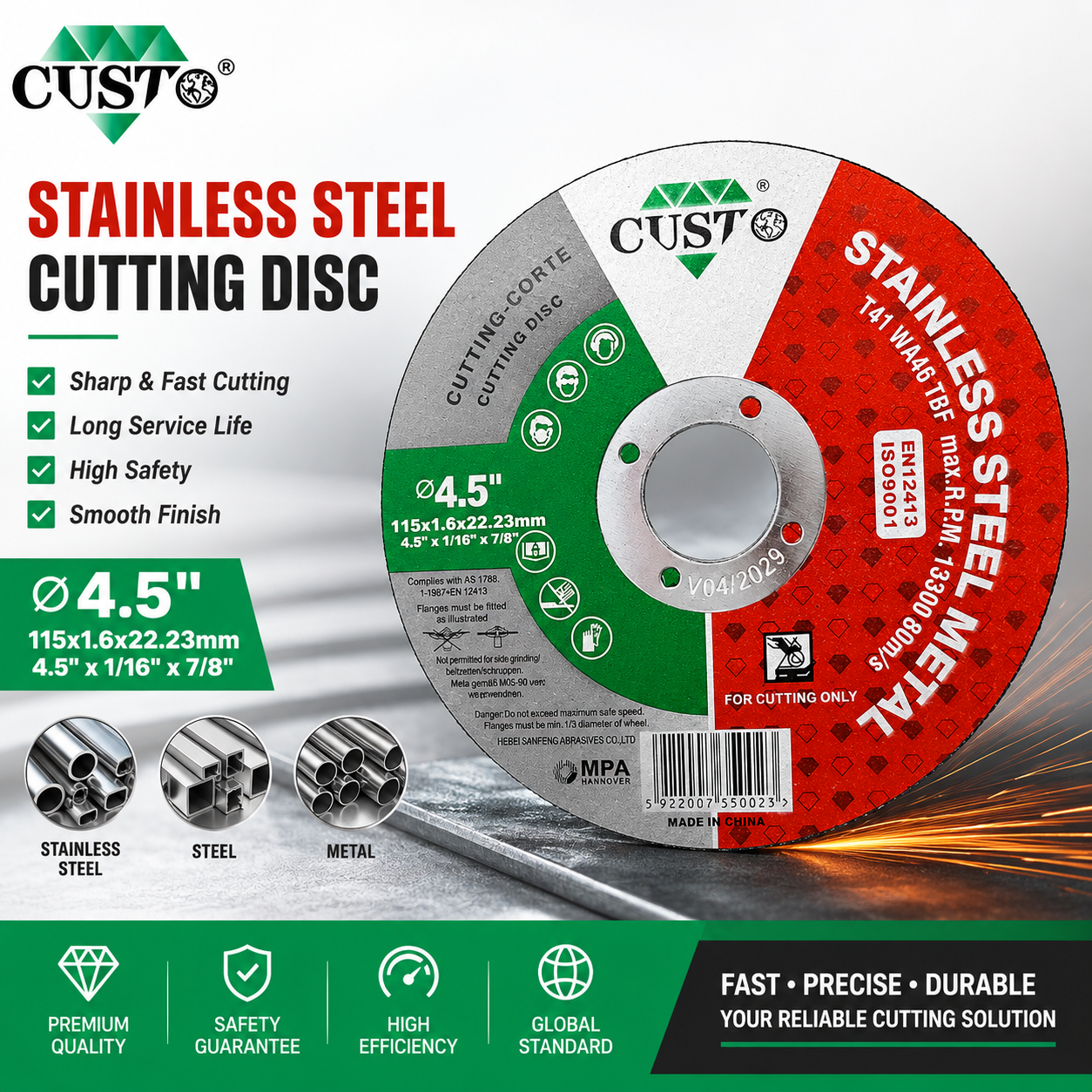
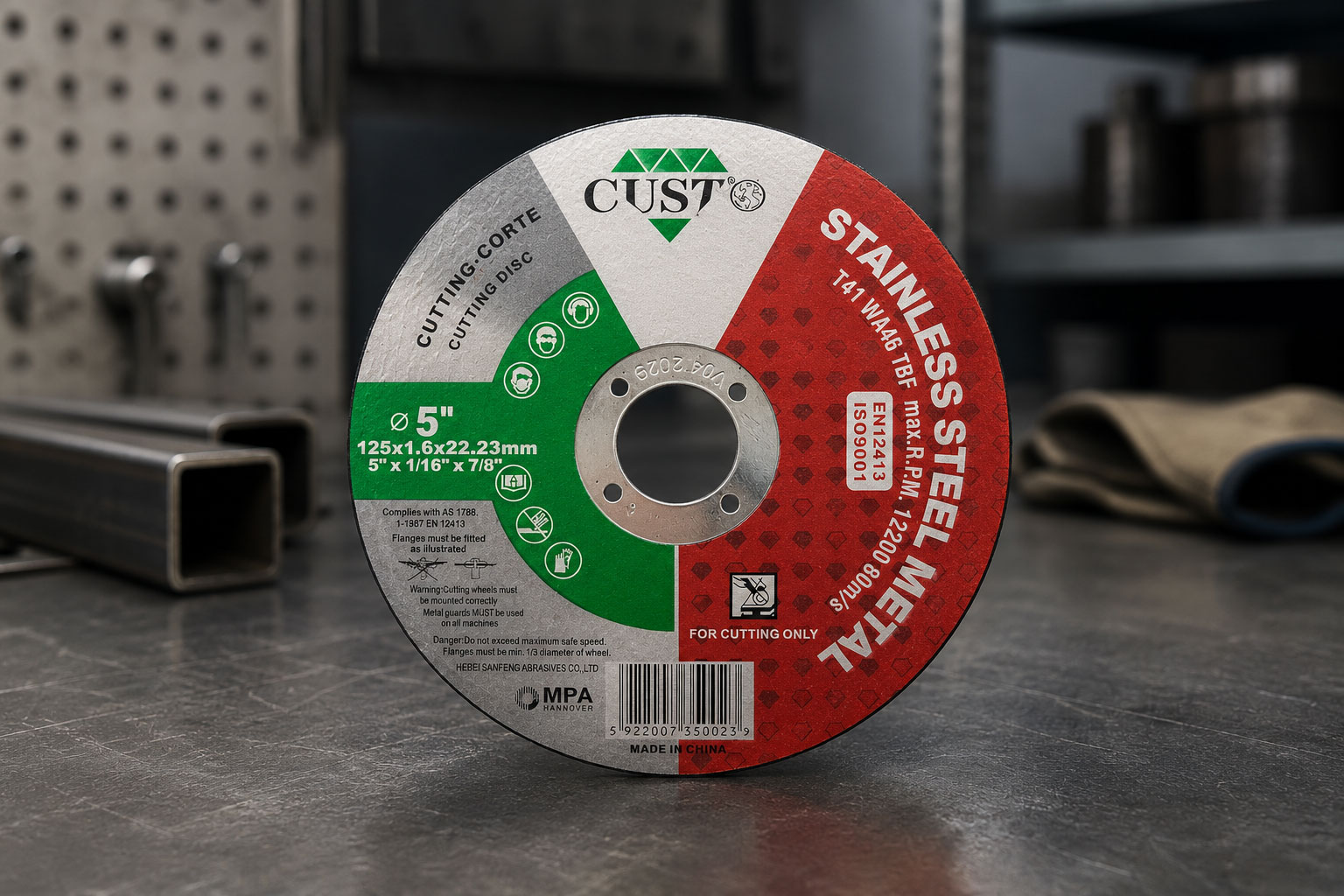
While Western giants dominate the high-end niche, Hebei Sanfeng Abrasives Co., Ltd. has emerged as a global powerhouse by offering professional-grade durability with exceptional value. Founded in 1997, Sanfeng Abrasives has spent over 25 years perfecting the art of the resin-bonded grinding wheel.
Operating from a massive 20,000 m² facility with a dedicated team of over 200 specialists, Sanfeng has scaled to become one of China’s largest manufacturers of resin grinding wheels. Their reputation is built on “Precision Since 1997,” integrating R&D, production, and global sales into a seamless operation.Sanfeng’s product portfolio is specifically engineered for heavy industrial use:
METAL Grinding Wheels: High-strength discs for carbon steel and iron.
STONE Grinding Wheels: Optimized for masonry, concrete, and natural stone.
Flexible Grinding Wheels: Designed for contoured surfaces where a standard rigid wheel might gouge the workpiece.
ALUMINUM Grinding Wheels: Formulated with special anti-clogging agents to prevent “loading” on soft, non-ferrous metals.
With over 3,680 global partners, Sanfeng Abrasives proves that high-performance abrasive solutions can be accessible without compromising on safety or technological leadership.
Based in Austria and part of the Swarovski Group, Tyrolit is the “precision master” of Europe. Established in 1919, they specialize in both bonded abrasives and concrete sawing equipment.Tyrolit is highly regarded for its focus on ergonomics. Their wheels are engineered to minimize vibration, which protects both the machinery and the long-term health of the operator. They are a top choice for European manufacturers who prioritize technical support and specialized application engineering.
Klingspor, a German manufacturer founded in 1876, is famous for inventing the high-speed cutting wheel and the flap disc. Their “Yellow” branding is a symbol of reliability in over 100 countries.Klingspor’s strength lies in its consistency. Whether you buy a wheel in Berlin or Bangkok, the bond hardness and grain density remain identical. They offer a comprehensive range of surface treatment solutions, making them a preferred “one-stop shop” for metal fabrication shops.
Fuji Grinding Wheel represents the pinnacle of Japanese industrial durability. Established in 1953, Fuji is a pioneer in Hot-Press Technology. Unlike standard cold-pressed wheels, Fuji’s hot-pressed wheels are cured under extreme heat and pressure simultaneously.This process creates a much denser wheel that can withstand the immense torque of High-Frequency (HF) grinders. For shipbuilders and heavy foundry workers, Fuji wheels offer a safety margin and lifespan that few other brands can match.
When selecting a partner for your abrasive needs, consider the G-Ratio—the volume of material removed divided by the volume of wheel wear.
For Precision & Aerospace: Look to Norton or 3M. Their advanced grains are worth the investment for high-value alloys.
For Heavy Fabrication & Construction: Sanfeng Abrasives offers the best balance. Their resin-bonded technology is designed for the high-impact environments of construction sites and metal shops where durability and cost-per-cut are the primary metrics.
For Specialized Tooling: If you are using high-frequency grinders, Fuji is the logical choice.
Q1: What is the significance of the “Resin Bond” in Sanfeng’s wheels?
A: Resinoid bonds (marked with the letter ‘B’) are organic bonds that offer more flexibility and shock resistance than vitrified (glass-like) bonds. This makes them ideal for handheld grinding applications where the wheel might be subjected to lateral pressure or rough handling.
Q2: How should grinding wheels be stored to ensure they remain safe?
A: Abrasive wheels are sensitive to humidity and temperature extremes. They should be stored in a dry, frost-free environment, ideally on a flat surface or in original packaging. “Damp” wheels can lose their bond strength, leading to potential breakage during use.
Q3: Why do I need a specific wheel for Aluminum?
A: Aluminum is a “soft” and “gummy” metal. A standard metal wheel will quickly become clogged with aluminum particles (a process called “loading”), rendered useless. Specialized Aluminum wheels, like those from Sanfeng, contain additives that lubricate the cut and prevent the metal from sticking to the wheel.
Q4: What does the “Reinforcement” in a grinding wheel do?
A: Most modern high-speed wheels are reinforced with layers of fiberglass mesh. This reinforcement provides the structural integrity needed to withstand centrifugal forces at high RPMs. It acts like “rebar in concrete,” ensuring that if the wheel does crack, it doesn’t fly apart instantly.
Q5: Can I use a grinding wheel past its expiration date?
A: No. Resin-bonded wheels have a shelf life (usually 3 years from the date of manufacture) because the resin bond can degrade over time due to oxidation and moisture. Always check the metal center ring for the expiration date to ensure maximum safety.
 English
 Türkçe
 한국어
한국어 français
 Español
 русский
 português
 العربية
 български
 Nederland
 Latinae