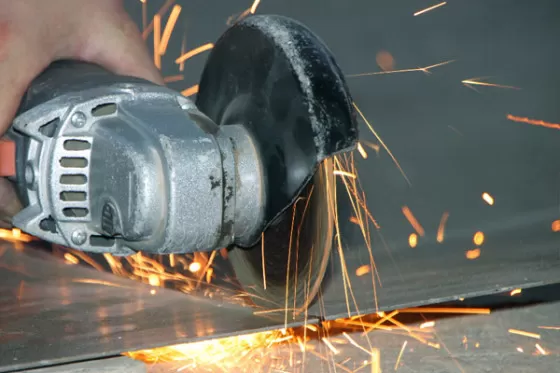
Putting a cutting disc on a grinder means mounting a compatible abrasive cut-off wheel onto the grinder spindle, securing it with the correct flange and nut, and checking safety before operation. For metal fabrication, repair workshops, construction and industrial cutting, correct disc installation is essential because angle grinders operate at very high speed.
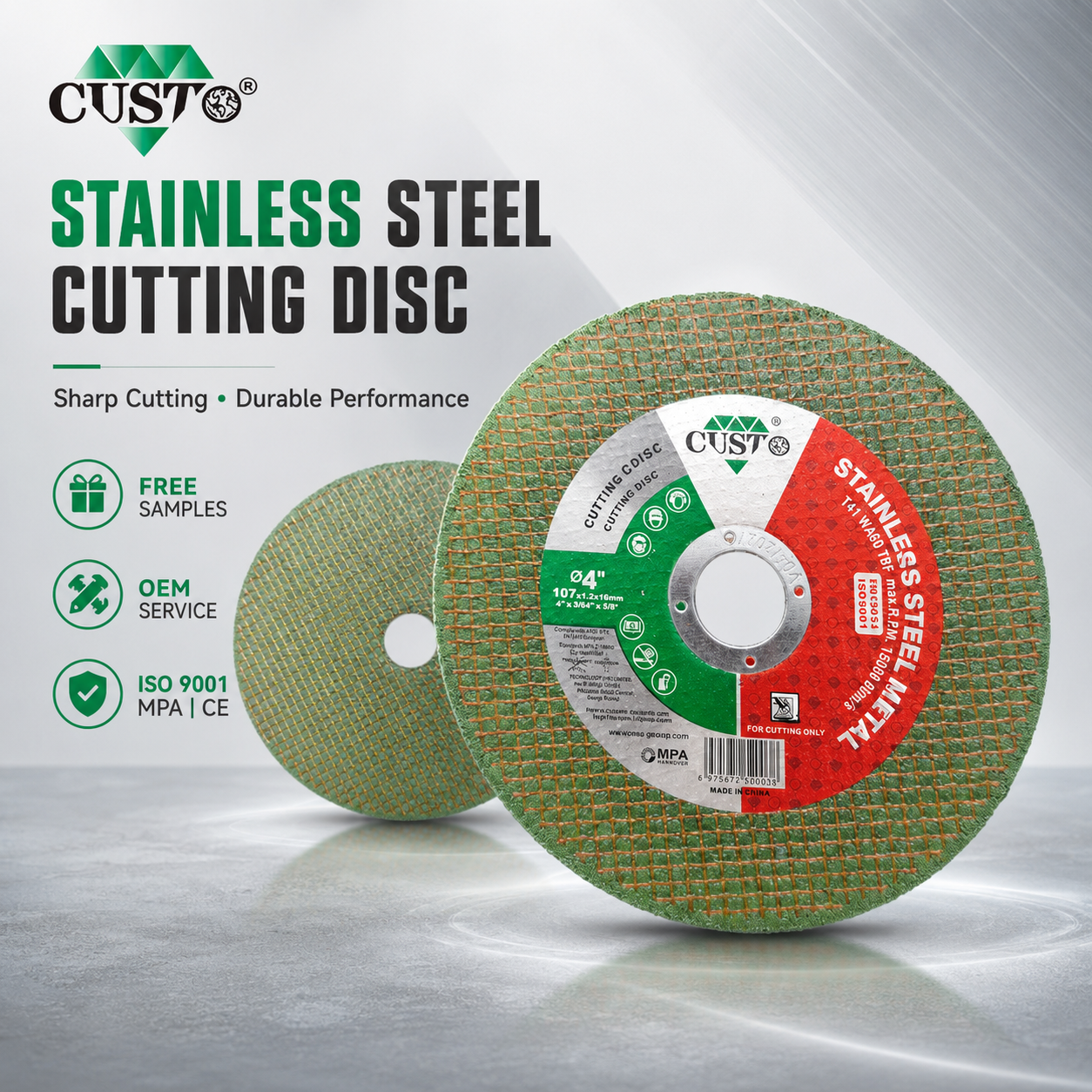
Sanfeng Abrasives provides cutting wheels, grinding wheels and flap wheels for cutting, grinding and finishing applications. Its cutting wheels are designed for portable and stationary grinders and are used on materials such as stainless steel, sheet metal, chrome steel, plastic and aluminum.
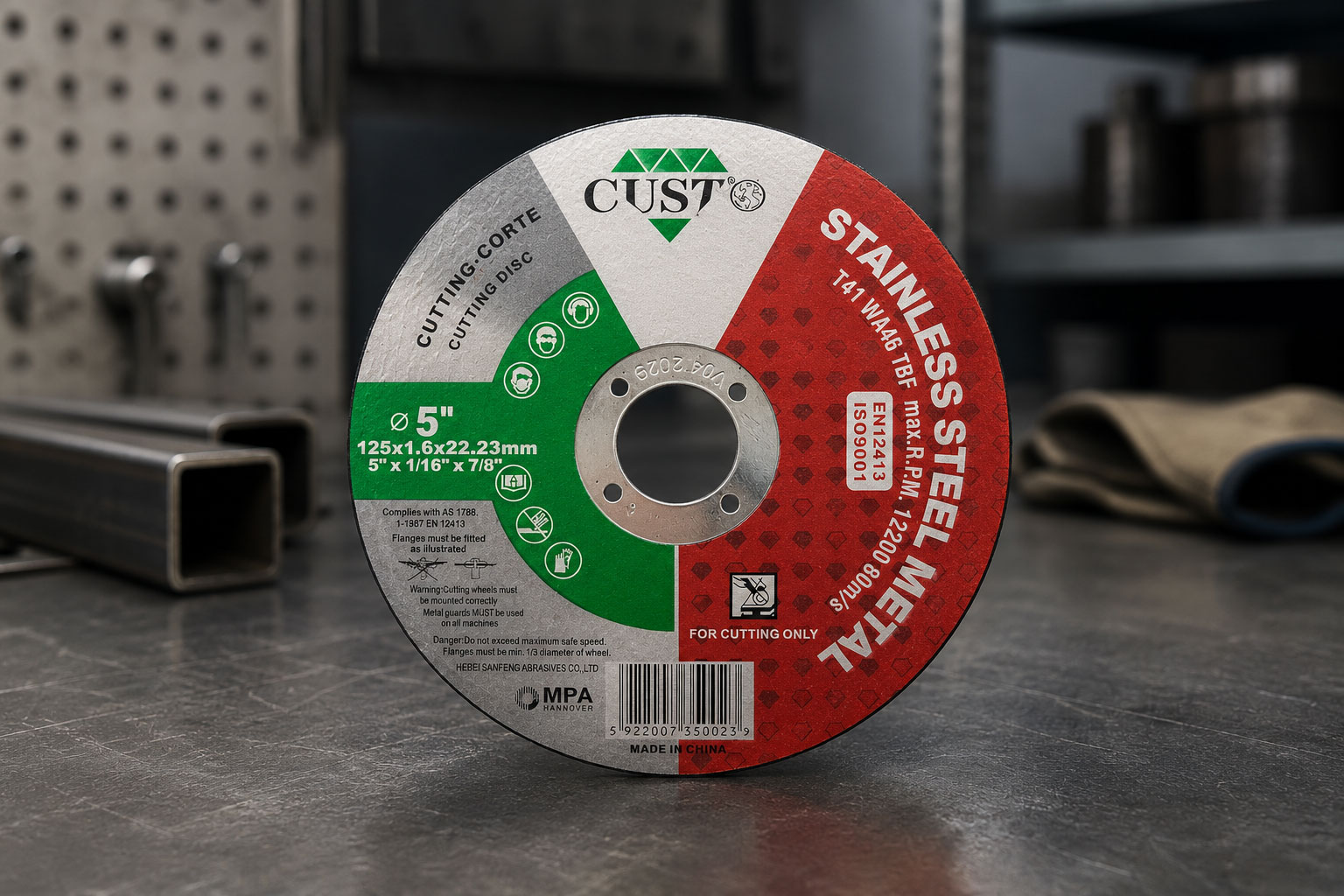
A cutting disc must match the grinder’s diameter, arbor size, speed rating, material application and guard configuration before installation. This check helps reduce disc breakage, vibration and unsafe operation.
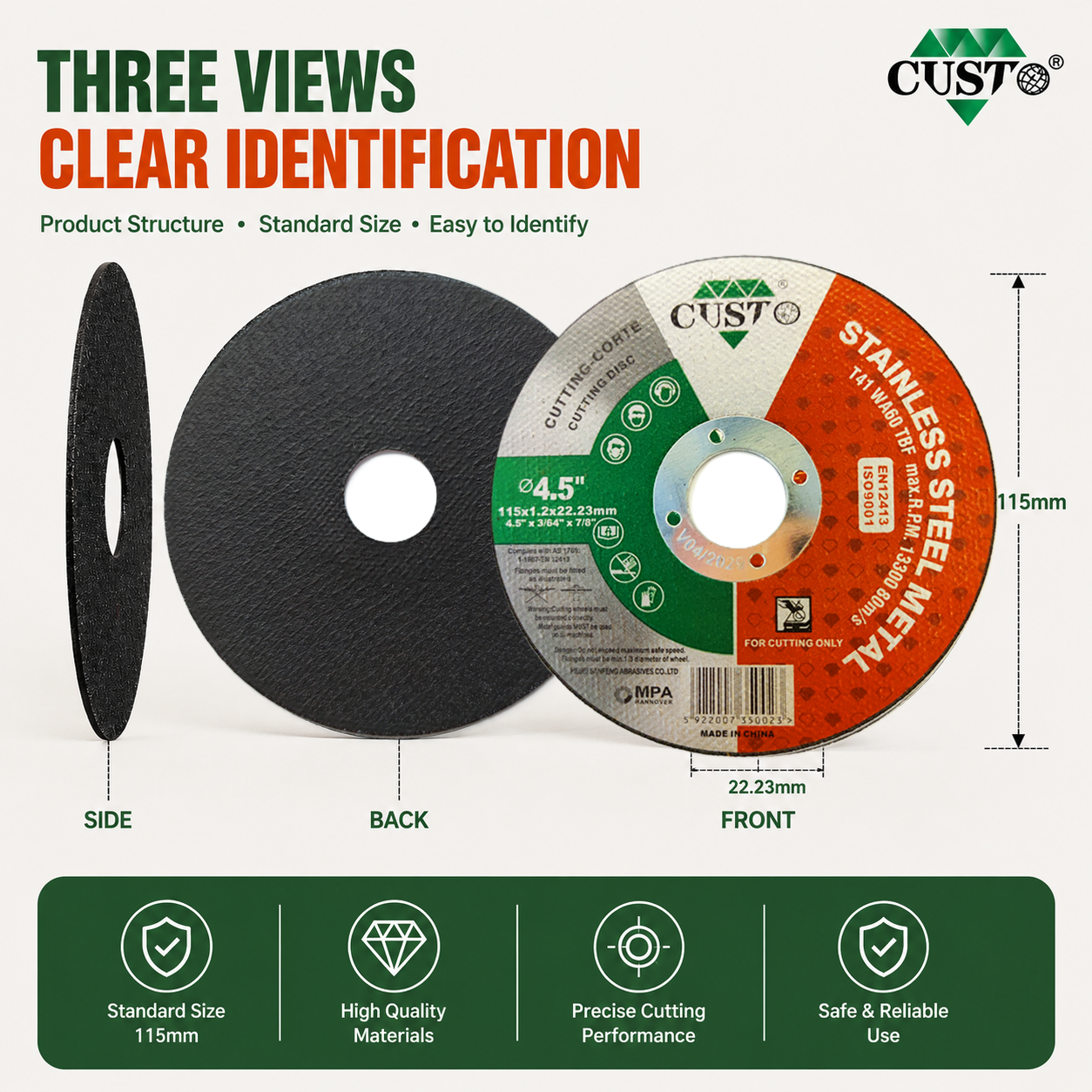
Start by confirming the disc size. A common angle grinder cut-off wheel size is 4.5 inch / 115 mm with a 22.23 mm bore, but buyers should always match the disc to the grinder nameplate and tool manual. The disc’s maximum RPM must be equal to or higher than the grinder’s no-load speed. Never install a disc with a lower speed rating than the grinder.
Also inspect the disc before use. Do not mount a cracked, wet, chipped, warped or dropped cutting disc. OSHA’s abrasive wheel machinery regulation states that abrasive wheel machinery guards should meet ANSI B7.1 design specifications, and it notes that controlled clearance between the wheel hole and spindle is essential to avoid excessive mounting pressure.
Installing a cutting disc on a grinder requires disconnecting power, checking the flanges, placing the disc correctly on the spindle and tightening the lock nut without over-tightening. The process should be done slowly and only when the grinder is fully stopped.
First, unplug the corded grinder or remove the battery from a cordless grinder. Press the spindle lock and use the correct wrench to remove the outer lock nut. Clean dust or metal particles from the spindle, backing flange and lock nut.
Next, place the cutting disc onto the spindle. The printed side may face outward on many angle grinders so the operator can read the disc rating, but the correct direction depends on the grinder flange design and manufacturer instructions. Make sure the disc sits flat on the backing flange and the center hole is not forced.
Then reinstall the lock nut. For thin cutting discs, use the flange side recommended by the grinder manufacturer. Tighten the nut firmly with the wrench while holding the spindle lock, but do not over-tighten. After mounting, rotate the disc by hand to check that it spins freely and does not touch the guard.
Before cutting, run the grinder in a safe direction for about 30–60 seconds without load. Stop immediately if you notice wobbling, abnormal noise or vibration.
A grinder cutting disc should be installed only after compatibility, safety and alignment are confirmed. The table below summarizes the most important checks for industrial users.
| Check Item | Correct Practice | Why It Matters |
|---|---|---|
| Power Source | Unplug tool or remove battery | Prevents accidental start-up |
| Disc Diameter | Match grinder rating, such as 115 mm for many 4.5 inch grinders | Prevents oversize disc hazards |
| Arbor Size | Match spindle and flange, commonly 22.23 mm on many discs | Ensures stable mounting |
| RPM Rating | Disc max RPM must exceed grinder speed | Reduces burst risk |
| Disc Condition | No cracks, chips, moisture or deformation | Prevents failure during cutting |
| Guard Position | Keep the guard installed and adjusted | Deflects sparks and fragments |
| Lock Nut | Tight but not over-tightened | Prevents stress and disc damage |
| Test Run | 30–60 seconds without load | Finds vibration before cutting |
The UK HSE guide Safety in the use of abrasive wheels covers training needs, wheel characteristics, mounting procedures, guards, portable grinders and protective equipment. FEPA also provides safety recommendations for bonded wheels on angle grinders before using cutting or grinding wheels on angle grinders.
Common cutting disc mounting mistakes include using the wrong disc size, removing the guard, installing a damaged disc, over-tightening the nut and using a cutting disc for side grinding. These mistakes can shorten disc life and create serious safety risks.
A cutting disc is designed for cutting at the edge, not grinding on the side face. If the task requires surface grinding, use a proper grinding wheel instead of a thin cut-off wheel. Sanfeng Abrasives offers grinding wheels for metal grinding tasks, while cutting wheels are intended for separating material with a narrow cut.
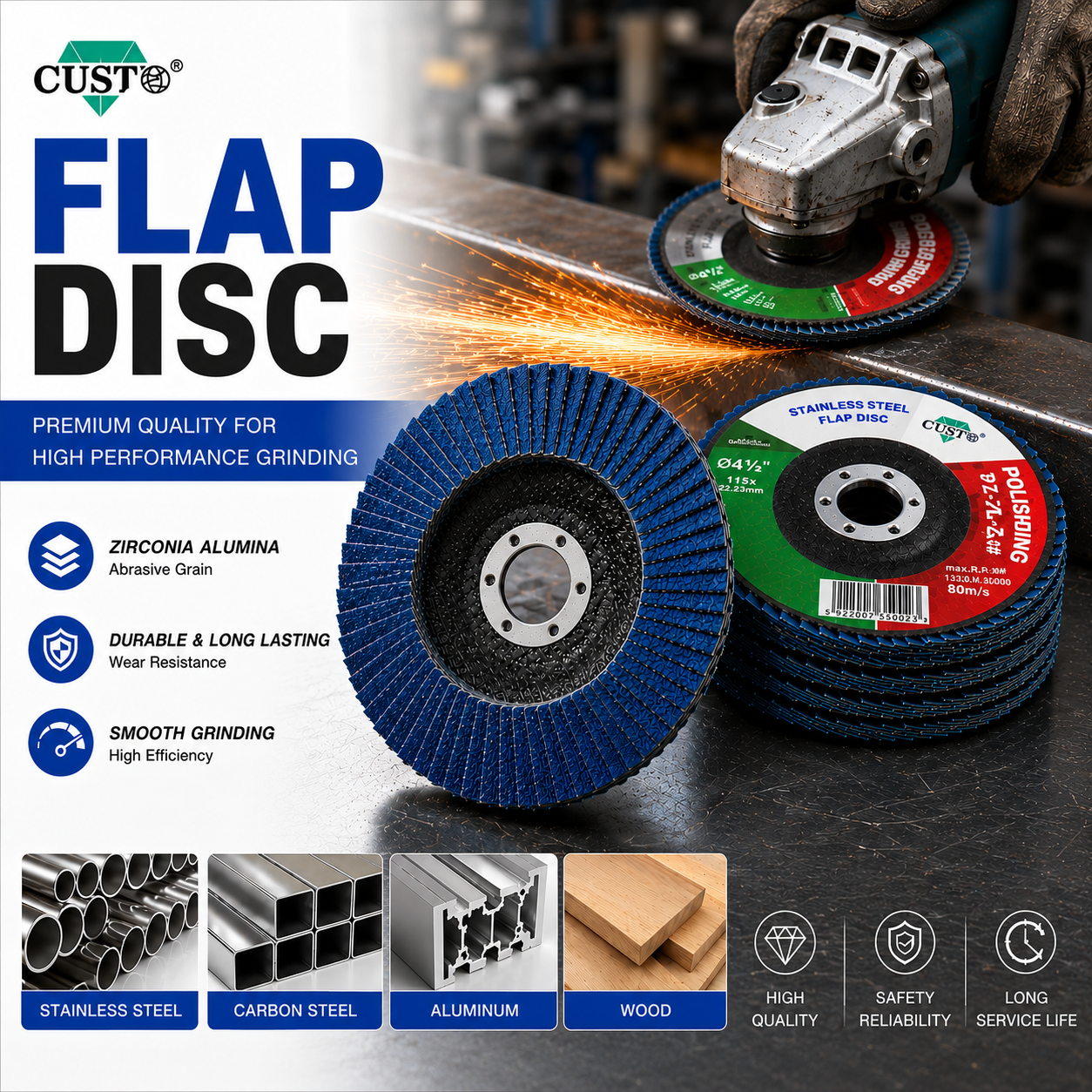
Another mistake is ignoring disc application. Stainless steel, aluminum, stone and general metal may require different abrasive formulations. Buyers should select the disc according to material, thickness, tool speed and cut quality requirements. For finishing after cutting, a flap disc may be more suitable than a cutting wheel.
Choosing a cutting disc supplier means evaluating product range, speed rating, disc size options, material compatibility, batch consistency, safety labeling and OEM support. For distributors and industrial users, consistent disc quality matters more than low unit price alone.
Sanfeng Abrasives supplies abrasive wheels for cutting, grinding and polishing applications. Its product range includes cutting wheels, grinding wheels, flap wheels, stone grinding wheels, metal grinding wheels and aluminum grinding wheels. Sanfeng Abrasives also states that its abrasive wheel factory covers 20,000 square meters and supplies abrasive wheel discs for cutting, grinding and polishing needs.
For bulk orders, buyers should confirm disc diameter, thickness, bore size, abrasive grain, bonding type, rated RPM, packaging, labeling language, private label requirements and target material before production.
Putting a cutting disc on a grinder is simple, but it must be done correctly. The disc should match the grinder size, bore and RPM rating, sit flat on the flange, be secured with the correct lock nut and always be used with the guard in place.
For safer and more efficient cutting, users should inspect every disc before mounting, avoid side grinding with cut-off wheels, test-run the grinder before cutting and choose discs according to the workpiece material. Sanfeng Abrasives provides cutting wheels, grinding wheels and flap wheels for industrial users, workshops, distributors and OEM buyers who need reliable abrasive products.
In many cases, the printed label side faces outward, but the correct direction depends on the grinder flange and disc design. Always follow the grinder and disc manufacturer instructions.
No. The disc must match the grinder’s diameter, arbor size, guard type and RPM rating. Never use a disc that is too large or rated below the grinder speed.
The lock nut should be tight enough to hold the disc securely, but not over-tightened. Excessive pressure can stress or damage the cutting disc.
No. Do not remove the guard to fit a larger disc. Use only the disc size approved for the grinder and guard.
No. A thin cutting disc is designed for edge cutting, not side grinding. Use a proper grinding wheel or flap disc for grinding and surface work.
Sanfeng Abrasives provides cutting wheels, grinding wheels and flap wheels for metalworking, stainless steel cutting, workshop repair, fabrication, construction and industrial abrasive applications.
 English
 Türkçe
 한국어
한국어 français
 Español
 русский
 português
 العربية
 български
 Nederland
 Latinae